
To rewild is to a restore a habitat to its former wild state, so that it can take care of itself again, restoring its own natural processes. (Rewilding Britain). Our imaginations may also need rewilding, to help us connect with our own deeper, creative nature and restore our own care-taking balance.
As young children, hopefully we were able to dream a bit…play, imagine, make up stories, delve into legend, fairy tale and myth, feed our growing imaginations. Most children thrive and feel alive in the world of story, nature and metaphor. Yet so quickly, as we grow up, creativity becomes all about being technically good at it… which is a shame because its wider benefits are so much bigger and more accessible than craft for a talented few.
Psychologist, Abraham Maslow is often only remembered for the hierarchy of needs, but actually he had some really important things to say about the role of imagination and creativity in people’s psychological health and personal development. He split creativity into two different parts, firstly, creativeness, and secondly, the mastery of the craft – the technical domain of professional writers, artists, sculptors. Maslow was interested in the creativeness, the creative, imaginative flow and process where people felt free to play with ideas and possibilities… he believed it was essential to humans realising their potential, whether artists or not. In fact, he proposed that the high-functioning, self-actualising adult, was able to tap into this natural state of creativeness and apply it to life, relationships, and work. Maslow stated that arts education was vital, not only for turning out artists, but empathic, aware, whole, flexible, fully alive, human beings, able to connect with others. He felt the way we used our senses in any kind of creative artmaking, was core to our biological self, to our real, deeper nature. By art, we’re talking about all of them… art-making, dance, drama, story.
Perhaps Maslow’s creativeness is the same thing as an imagination that roams freely, when given space and time to take care of itself. All these different ideas fed into Rewilding Children’s Imaginations, a creative manual which I co-wrote with artist, arts educator, Sarah Pimenta and writer/former teacher, Tamsin Cooke. Our aim was to try to bring together the imaginative and natural worlds, to help children build confidence to roam more freely in both. Rooted in folktales and natural habitats across the world, Rewilding Children’s Imaginations offers creative activities to help children connect to their senses, ideas, nature, and create their own unique stories and images. The emphasis is placed on the creative process, giving children an opportunity to play, create, design, tell stories … in connection with nature and the seasons around them.
Yet, I believe that as adults, we equally need to make space and carve out time for this creativeness and connection to our deeper nature, both inside, and outside of us. So many people struggle with inner critics that kill off their ideas, thoughts and feelings, before they’ve seen the light of day. When other people are accused of having an over-active imagination, perhaps they weren’t given enough opportunity to play, roam, express it and use it. What does imagination do when it’s met with anxiety, hostility, judgement? What does creativity that is unexpressed do to us, physically, emotionally, mentally? I wonder if it takes a much darker turn. What does an imagination that has the right to roam do… that can play with form without so much pressure to perform and succeed?
If we can create healthy channels for our naturally wild and fertile imagination to express itself, for the sheer joy and discovery of the creative process, I believe we can make positive differences to our wellbeing, and counteract some of the pressures of modern living, as well as the states of rigidity and anxiety that seem to characterise our time.
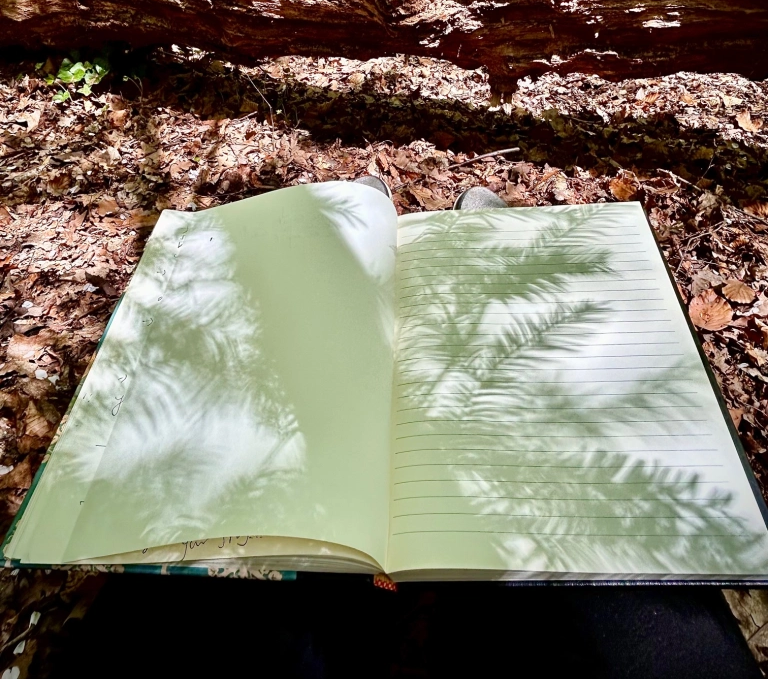
Creative activities that are not solely based on craft.. but that also allow us to go into inner landscapes and explore our own ideas, feelings, ways of seeing the world freely… are one way to rewild our imaginations. Being out in nature and feeling our senses awaken, also rewilds our imaginations. In doing so, we can free up the imagination to offer us its natural life-giving properties – to play and experiment, to be in the present, find our voice, to build confidence in our own visions outside of external recognition and the public stamp of approval, and to bring a sense of meaning, both to ourselves, and in how we relate with others.
On a final note… Rewilding Britain tells us that if we rewild habitats then lost and missing species will often return. Perhaps it’s the same for rewilding our imagination, and we can reclaim lost and missing parts of ourselves, to help us feel more aware and alive, so that we can also connect to others and the natural world in more open, present and alive ways.
References
· Rewilding Britain website link: What is rewilding? | Rewilding Britain
· Maslow on creativity in: The Farther Reaches in Human Nature

· Rewilding Children’s Imaginations: 99 Creative Activities Inspired by Nature and Folktales from Around the World

Leave a Reply